What is a Pay Stub and Why Do You Need It?
A pay stub (also known as a payslip or earnings statement) is a document issued by your employer each payday. It provides a detailed breakdown of your total earnings and the deductions taken out for that pay period.
Whether you receive your salary via traditional cheque, direct deposit, or another payment method, your pay stub serves a crucial purpose. Lenders, landlords, and banks frequently request recent pay stubs to validate your income, ensuring your mortgage or loan application details line up perfectly with your employment letter.
Where Can You Get Your Pay Stub?
Your employer’s human resources (HR) or payroll/accounting department is responsible for providing your pay stubs. Depending on your company’s setup, you might receive them in a few different ways:
Digital Payroll Portals: Many modern workplaces use online platforms (like ADP, Ceridian, or QuickBooks) where you can securely log in and download your stubs.
Email: Some companies securely email password-protected PDF versions of your pay stub every pay cycle.
Mail or Hand-Delivered: You may still receive a physical, printed pay stub delivered to you bi-weekly or monthly.
What Does a Canadian Pay Stub Look Like?
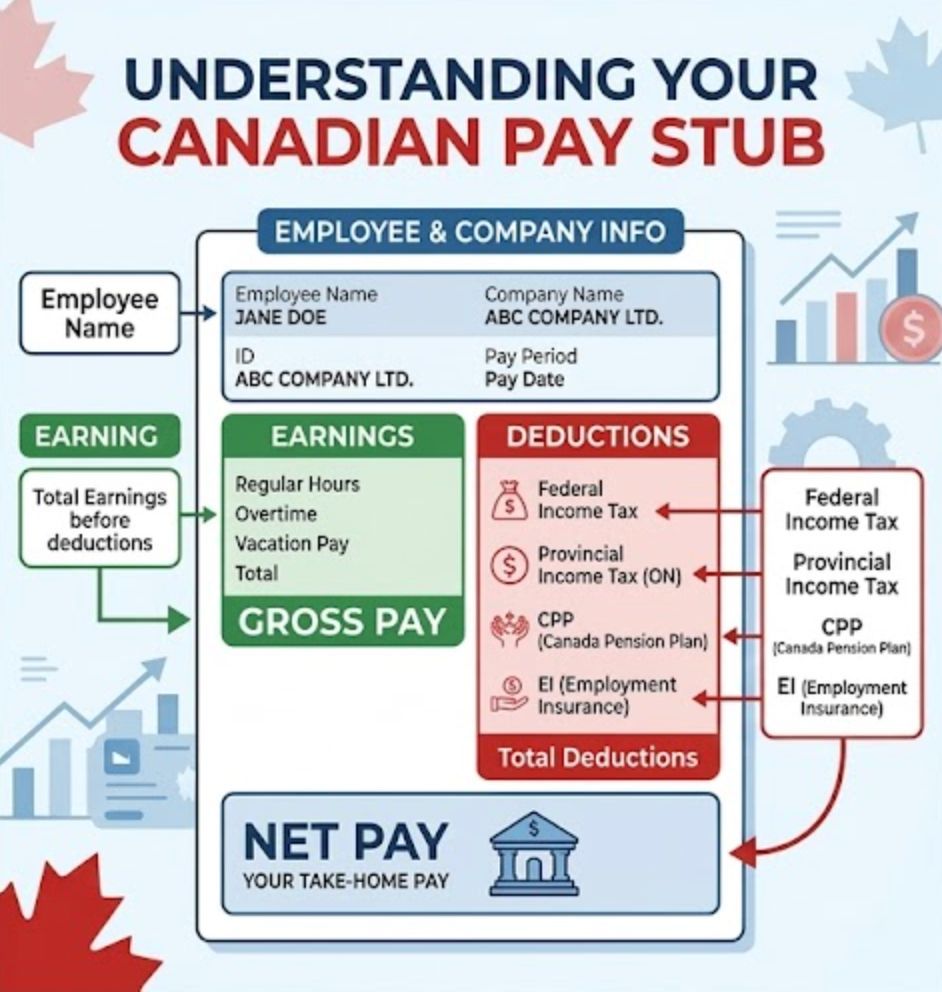
Instead of guessing, it’s easiest to look at a standard layout. A typical Canadian pay stub is divided into three main sections: Employee/Employer Information, Earnings, and Deductions.
Here is a simplified breakdown of the key components you will see on an example Canadian pay stub:
| Section | Field Name | What It Means | | --- | --- | --- | | Header | Company & Employee Info | Names, addresses, pay period dates, and the specific pay date. | | Earnings | Gross Pay | Your total earnings before any taxes or deductions are taken out. | | Deductions | Federal / Provincial Tax | Income tax withheld by the government based on your tax bracket. | | Deductions | CPP (Canada Pension Plan) | Your mandatory contribution toward the national retirement pension. | | Deductions | EI (Employment Insurance) | Mandatory premiums paid to secure temporary income if you lose your job. | | Bottom Line | Net Pay | Your actual "take-home" pay. This is the exact amount deposited into your bank account. |